Has the AI jobs debate has finally grown up?
29 June 2026
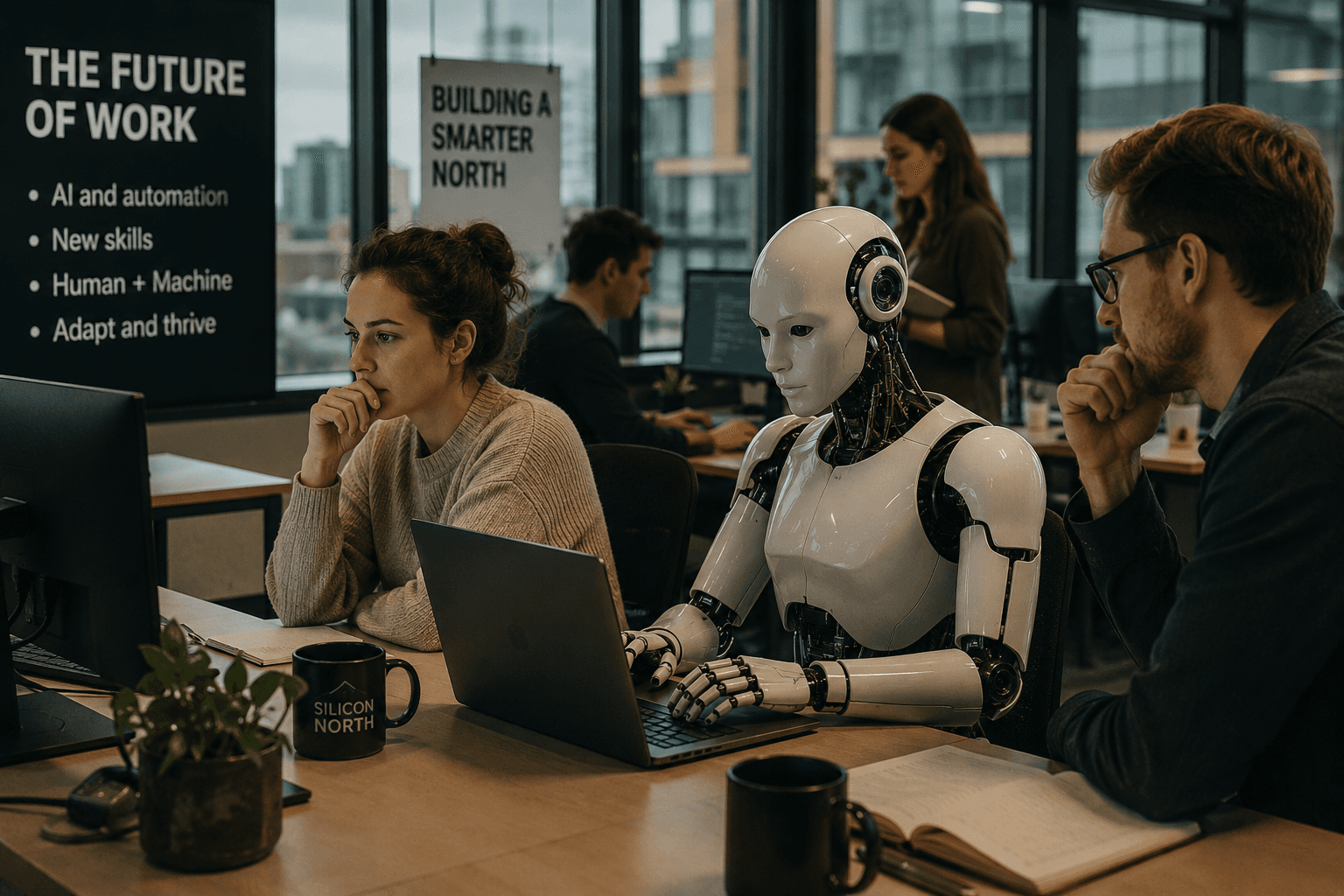
For the past two years, the conversation has been predictable.
Artificial intelligence would either replace everyone, or it would create millions of new jobs. Depending on who you listened to, we were heading for mass unemployment or another industrial revolution.
Reality, as usual, has turned out to be less theatrical.
What we're seeing now is something more interesting. AI isn't simply eliminating jobs. It's reshaping them.
Some businesses are reducing headcount as they automate routine work. Others are recruiting aggressively, but for different skills. The market isn't shrinking uniformly. It's being rearranged.
Software engineers remain in demand. Infrastructure engineers are becoming increasingly valuable. AI specialists can often name their price. Meanwhile, some entry level roles that once existed to carry out repetitive tasks are becoming harder to find.
That presents a challenge.
For decades, junior roles were how people learned their craft. If AI performs much of that work, where does the next generation gain experience?
It's a question with no obvious answer.
There are signs that even some of the biggest companies are discovering the limits of automation. Ford recently brought experienced engineers back into the business after concluding that AI alone wasn't delivering the quality it required. Experience, judgement and context remain stubbornly difficult to automate.
Perhaps that's the real lesson.
The most valuable people in the AI economy won't necessarily be those who know how to write the cleverest prompt. They'll be those who understand a customer, an industry, a supply chain, a balance sheet or a production line, and know where AI genuinely adds value.
Technology has always rewarded people who adapt.
The spreadsheet didn't eliminate accountants. Cloud computing didn't eliminate IT departments. The internet didn't eliminate retail. Each changed the nature of the work and raised expectations of the people doing it.
AI looks different only because it's happening faster.
For the North, this matters.
Our universities don't simply need to produce graduates who understand artificial intelligence. They need to produce graduates who know how to work alongside it.
Our employers don't need AI strategies that look impressive in a board pack. They need businesses that become more productive without losing the judgement, creativity and experience that still distinguish people from machines.
And our ecosystem needs to stop asking whether AI will take jobs.
It already has.
The better question is whether we're preparing people for the jobs that replace them.
That feels like a far more useful conversation.