Your New Menu Is Live. Shame Nobody Told Google
14 October 2026
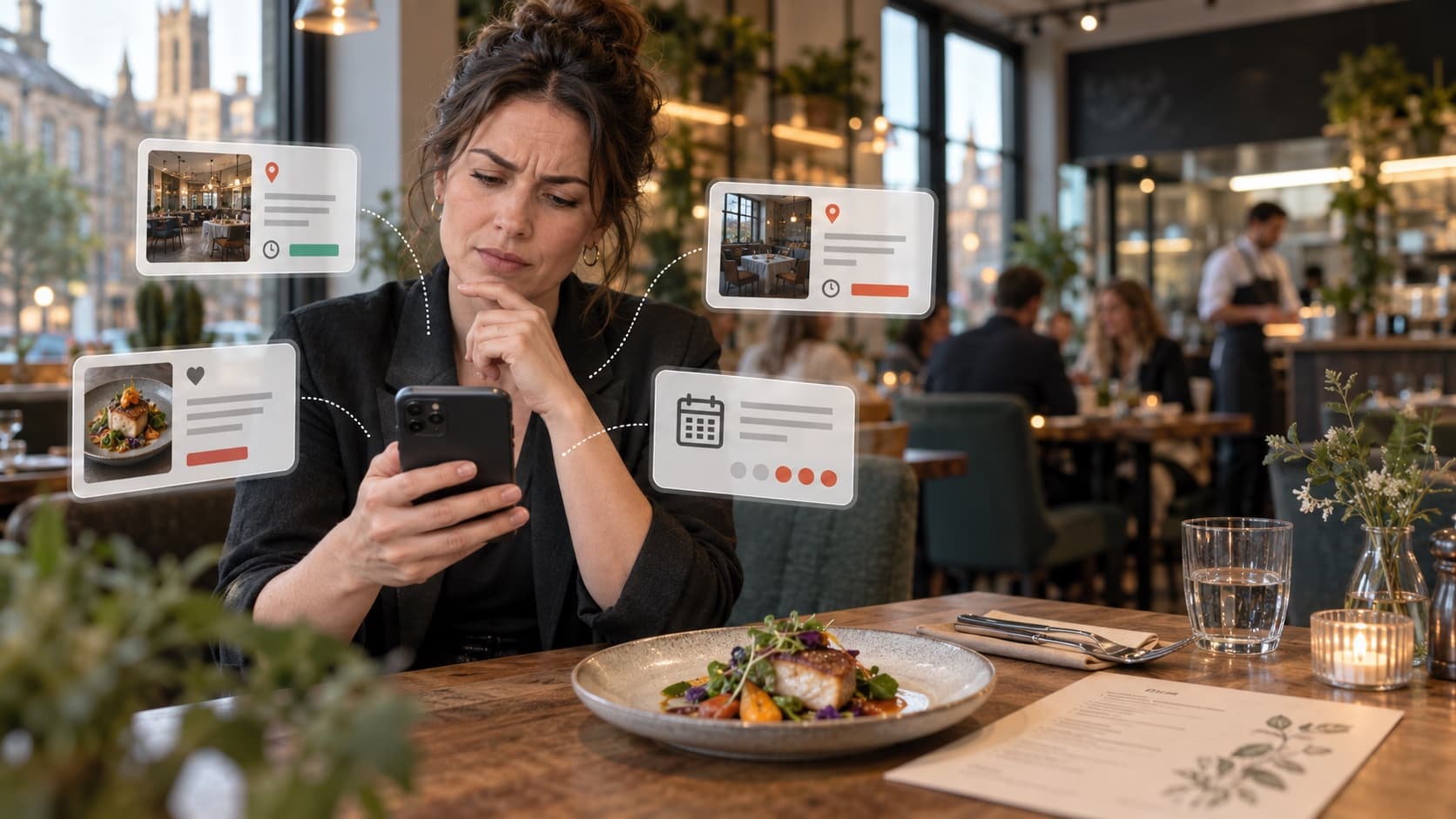
A restaurant launches its new menu on Friday. The photos look great. Instagram is busy. The team is excited.
There is just one problem. The website still shows the old menu. Google has last month’s opening hours. The booking page says nothing about the launch, and the email links to the homepage.
The campaign is live, but the useful information is playing hide and seek.
This happens across hospitality. Hotels promote packages that are hard to find on their booking system. Venues announce events without updating their website. Pubs change bank holiday hours on Facebook but forget Google. Restaurants sell a Sunday offer through social media while their online menu tells a different story.
Guests do not see the work behind each channel. They see one business. If the details clash, they have to decide which version to trust. Some will check. Others will simply choose somewhere easier.
MORE TECHNOLOGY WILL NOT FIX AN UNCLEAR ANSWER
The usual response is to blame the systems. The website does not speak to the booking platform. The social team cannot edit Google. The email tool belongs to somebody else.
Those issues may be real. Better links and integrations can save time. But technology cannot decide which menu, price or opening time is correct. It can only move the information it receives. Give it the wrong detail and it may spread the mistake with impressive speed.
The first question should be simple: where does the official answer live?
The website might hold the full menu and accessibility details. Google Business Profile might hold public opening hours and temporary closures. The booking system controls live table or room availability. Social media explains what is new and gives people a reason to care.
Each channel has a job. Trouble starts when nobody knows which one is in charge of each fact.
GIVE EVERY IMPORTANT FACT AN OWNER
You do not need a grand digital transformation project to sort this out. Start with the details that help a guest decide whether to visit, book or enquire.
For each fact, write down five things:
1. What is the information?
2. Where does the official version live?
3. Where else does it appear?
4. Who is responsible for changing it?
5. What event or date should trigger the update?
Take Christmas opening hours. The information is the exact service time for each day. Google may be the main public source, while the website, booking tool, social channels and confirmation emails repeat it.
One named person owns the update. The trigger could be final approval of the festive rota, with a second task set to restore normal hours in January.
That last part matters. Nobody wants to discover Easter opening hours still showing in June. Yet information often stays online because the plan covered publishing it, not removing it.
TEST ONE REAL CAMPAIGN FROM START TO FINISH
Trying to repair every channel at once is a good way to create a large spreadsheet that nobody opens again. Pick one campaign instead.
A Christmas menu, hotel package, ticketed event or private dining offer will do. Follow it from the first post to the final booking or enquiry.
Can a guest find the full offer? Do the dates and prices match? Does every link reach the right page? Is availability clear? Does the confirmation email repeat the details people need? When the offer ends, who removes it?
This simple test often finds the awkward gaps between teams. Marketing publishes the campaign. Operations changes a service time. The booking provider controls availability. Someone else looks after the website.
Everybody finishes their own job, but the guest journey still falls between the chairs.
That is not a reason to add another meeting to the diary. It is a reason to give the whole journey one final check.
USE THE PHONE TEST
Once the campaign is ready, complete the journey on a phone as if you were a guest.
Search for the business rather than starting on its homepage. Open the result that looks most useful. Check the offer, follow the booking or enquiry link and read the confirmation.
Do not fill in the gaps using insider knowledge. A guest does not know that the events manager has the latest PDF or that reception can explain the package on the phone. The public journey has to make sense on its own.
This check can also improve measurement. When old links and scattered pages send people down different routes, it becomes harder to see what worked.
A cleaner path will not create perfect reporting, especially when an outside booking system is involved. It will give the business a better chance of understanding what guests did next.
MAKE SPEED SAFER
Hospitality information changes quickly. Menus move with the season. Hotels add date limits to packages. Venues change capacities. Restaurants close for private events. Pubs revise hours around bank holidays.
The answer is not to slow everything down. It is to make quick changes safer.
Good technology helps by reducing repeat work and making updates easier. Good marketing makes the offer clear. Operations supplies the live detail. But somebody still needs to own the final answer and check where it appears.
That may be the least glamorous part of a campaign. It can also be the difference between a guest finding a smooth route to book and wondering whether the offer exists at all.
Before buying another platform, choose one important guest journey and write down who owns each fact. Then test it on a phone.
The clever bit is not making every system do everything. It is making sure they all tell the same story.